Yes - Tales from Topographic Oceans (2 LP)
- LP
- 2 piece(s)
- 1973
- 6 tracks
- 2 uur, 3 min
- progressive rock
Tales from Topographic OceansCheapest atamazon.co.uk
Whether you're just starting your vinyl collection or have been spinning for years, the right turntable makes all the difference. We've selected the best options for every budget.
Discover our selection of turntables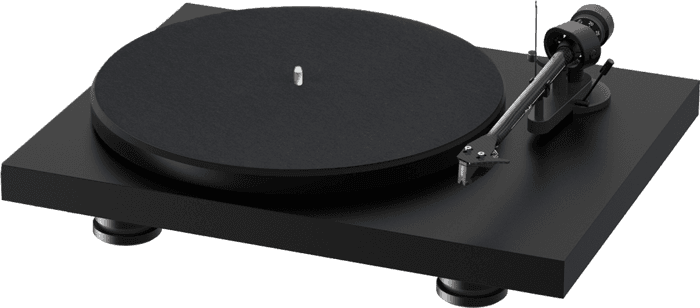
4.3
Average of 34 reviews
23
6
4
1
0
Whether a review is positive, negative, or neutral, we always publish it. However, we screen every review to ensure it is authentic and free of profanity. These checks happen automatically, though a human occasionally steps in. We never pay for reviews.
I just picked up this one, it's in MINT condition, the sleeves are amazingly well kept. Sounds fan tas tic.
Among the numerous misconceptions that have clouded the public perception of "Tales From Topographic Oceans" over the years, the idea that the album is merely "too long" has always seemed to me the most shallow and misleading. This belief has been strengthened by a certain discomfort even within the band, particularly from their acclaimed keyboardist Rick Wakeman, whose discontent has often been taken as the final say on the work. However, in my opinion, the issue, if there is one at all, with TFTO has never been its length. Its supposed "excessive duration" is a convenient excuse, but ultimately an empty one. Wakeman’s well-known remark that the material was "enough for a single album, but not enough for a double" does little to honor the complexity of what was happening within Yes at the time. If anything, his comment reflects a deeper frustration: he had not been part of the conceptual spark that ignited the project, and he never truly connected with its philosophical roots. It is worth noting that Wakeman, for all his immense artistic sensitivity, was born under the sign of Taurus, an Earth sign, practical, grounded, instinctively skeptical of metaphysical flights. His creativity is sensual, concrete, rooted in the physicality of sound and performance. Anderson’s mystical enthusiasm, drawn from Paramahansa Yogananda’s "Autobiography of a Yogi," belonged to a different realm entirely. The idea of structuring a double album around the four shastras, four ancient Indian scriptures representing distinct paths to spiritual knowledge, resonated deeply with Anderson and Steve Howe, who saw in it the blueprint for a vast musical mandala. For Wakeman, however, this conceptual framework was too ethereal, too abstract, too detached from the narrative clarity he valued. This philosophical disconnect was not the only source of tension. Over the years, several musicians who have worked with members of Yes have privately acknowledged that Steve Howe, for all his brilliance, can be a demanding and sometimes difficult creative partner. I once heard this privately from a major figure in the music world, someone with deep experience working alongside virtuoso guitarists, who shared it with a mixture of admiration and weary respect. Such remarks do not diminish Howe’s genius; rather, they illuminate the intense, perfectionist energy that shaped both the triumphs and the tensions of the band during this period. In the context of "Tales," this temperament inevitably amplified the distance between Howe’s visionary immersion and Wakeman’s growing detachment. The sessions became long, slow, and dominated by Anderson and Howe’s meticulous layering. Wakeman often found himself with little to do, watching the others build an edifice he did not feel part of. His boredom, immortalized in anecdotes of darts, curry, and long silences, was not petulance but the visible symptom of a deeper artistic estrangement. He simply did not believe in the world the album was trying to evoke. And yet, none of this means that TFTO is "too long." Its expansiveness is not a flaw but a deliberate choice, an attempt to create a musical space large enough to contain the symbolic breadth of the four shastras. The album’s ambition is inseparable from its scale. To reduce its challenges to a matter of minutes and seconds is to miss the point entirely. There is, however, another factor that contributed to the album’s troubled reception: the spirit of the age, increasingly impatient with grand designs. By late 1973, after years of dazzling ascent, the progressive rock arc had begun its slow, almost imperceptible descent. The cultural climate was shifting. The public’s patience for sprawling conceptual works was thinning, and the seeds of the coming iconoclastic backlash were already germinating. Within a few years, the fury of punk would erupt precisely against the kind of grandiose, metaphysical ambition that TFTO embodied. In this sense, the album was not only misunderstood: it was out of sync with the historical moment, a cathedral rising just as the age of cathedrals was ending. And yet, as it often happens in the most intricate artistic plots, "Tales From Topographic Oceans" generated consequences that went far beyond its immediate reception. The maelstrom of tensions it unleashed ultimately led to Wakeman’s departure, a dramatic and potentially destructive event, the kind that can shatter a band’s identity. But Yes, in one of the most astonishing acts of creative resilience in rock history, transformed that crisis into opportunity. They recruited the extraordinary Patrick Moraz, whose fiery, modernist, jazz-inflected genius would help them forge "Relayer": not only one of the greatest Yes albums, but one of the most extraordinary achievements in the entire progressive rock universe. In this sense, "Tales" acted as a crucible, painful, divisive, but ultimately generative. This dynamic reminds me of a parallel from the literary world. In a past academic study of mine, "Ambitions and Failures in Thomas Hardy’s 'Jude the Obscure,'" I noted how the ferocious Victorian backlash against "Jude" drove Hardy to abandon the novel altogether. And yet, that same rejection gave birth to the second phase of his creative life: his poetry, which he pursued until his death, exploring the very same themes that had animated his fiction. What seemed like a defeat was, in truth, a metamorphosis. So it is with "Tales From Topographic Oceans." Its inner controversies and internal fractures, its misalignment with the zeitgeist, rather than diminishing it, reveal its deeper significance. It stands not only as a bold, misunderstood monument of progressive rock, but also as the hinge between two eras of Yes: the mystical cathedral of "Tales" and the fierce, visionary architecture of "Relayer." If "Tales" is a troubled work, it is not because it overstays its welcome, but because it was born at the crossroads of divergent artistic destinies. Anderson and Howe were reaching toward transcendence; Wakeman was standing firmly on the ground; the audience was beginning to turn away from the very ideals that had made Yes possible. And yet, from this philosophical, personal, and cultural tension emerged not only one of the most audacious statements in progressive rock, but also the conditions for one of its greatest masterpieces. TFTO endures not despite its fractures, but because of them, a reminder that great art often emerges from the very tensions that threaten to undo it. And perhaps it is no coincidence that Steven Wilson, one of the most discerning and respectful custodians of progressive rock’s legacy, chose to revisit TFTO among his major remixing projects. In doing so, he also addressed one of the album’s few objective shortcomings: a recording whose original mix was undeniably muted, slightly opaque, never quite worthy of the music’s ambition. Wilson’s meticulous restoration has allowed the album to breathe at last, revealing colors, dynamics, and depths that had always been there, waiting beneath the surface. It is a final vindication, a proof that even the most contested works can, with time and care, reveal their true stature.
I'd give this one an 8.5/10, it's a real treasure! While "Close to the Edge" and "Relayer" are my top picks, this vinyl is equally captivating... fantastic!!
The version I got is just as described here. However, on the front cover, up at the top right corner, it mentions: "ESTEREO Album de 2 discos". So, there must be various Mexican editions out there.
Having just finished Yessongs, which I found to be an incredible live album but somewhat lacking in production quality, I must say that TOTO delivers on the production front. This Shelley pressing is absolutely fantastic.
See exactly which retailer has this album in stock and where you'll get the best deal. Compare prices below and order your LP directly.
| Date | Lowest price | Average price |
|---|---|---|
| 31 Mar 2025 | £27.99 | €33.99 |
| 30 Apr 2025 | £28.49 | €28.49 |
| 31 May 2025 | £27.99 | €35.49 |
| 30 Jun 2025 | £28.49 | €28.49 |
| 3 Jul 2025 | £28.99 | €28.99 |
| 30 Aug 2025 | £27.99 | €27.99 |
| 30 Sept 2025 | £27.99 | €33.99 |
| 31 Oct 2025 | £28.49 | €34.24 |
| 29 Nov 2025 | £27.99 | €33.99 |
| 31 Dec 2025 | £37.99 | €38.99 |
| 31 Jan 2026 | €26.99 | €58.32 |
| 28 Feb 2026 | €26.99 | €77.62 |
| 9 Mar 2026 | €26.99 | €54.74 |